Inspection, treatment and moisture advice
Booklice control in Belgium
Booklice at home? We investigate where they occur and the moisture problem. You receive a targeted approach, clear costs beforehand and advice to prevent further problems.
Explore our approachNo-obligation quote · direct contact with Eversor
- Investigate the moisture sourceIncluding the conditions behind the problem.
- A clear treatment planWork and costs agreed beforehand.
- A report after every visitFindings, treatment and next steps.
Booklice in your home
Small insects. A moisture source that needs attention.
Booklice are often found on walls, near skirting boards, around windows or among stored items. They feed on mould among other materials and readily occur in damp rooms. Removing only the visible insects is therefore not enough.
Eversor investigates what you see, where activity occurs and which measures are needed. You know how we will address both the insects and the conditions in your home.
Unsure which species it is?
Keep a specimen or take a sharp photo with an object alongside it for scale. Tell us which room you found it in.
View the identifying featuresAfter building work or renovation?
New plaster, flooring or other building materials may still release moisture. Record where and when you see insects.
View advice after renovationHow we work
An approach that starts with your home
The locations and moisture conditions determine what is needed. We first agree on the plan and costs, then carry out the agreed work.
Identification and locations
We check the insects and map the active areas. You tell us how long you have seen them and what has changed in your home.
Moisture and conditions
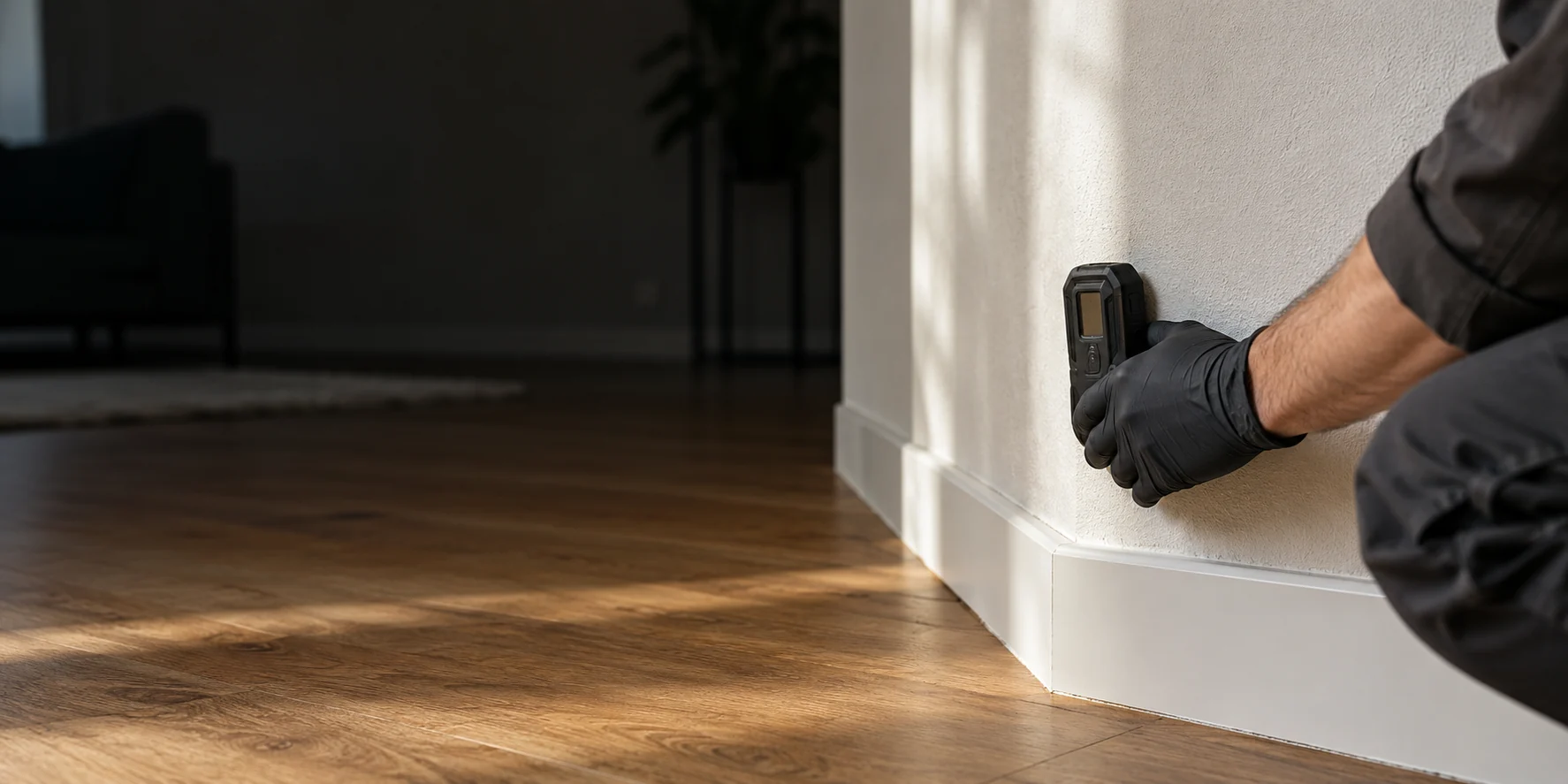
We assess ventilation, condensation, leaks and construction moisture. Measurements help identify suspicious areas and differences between rooms.
Targeted measures
We agree on drying, cleaning and any treatment of active areas. Necessary building repairs are discussed separately.
Checks and follow-up
After every visit you receive a report. At follow-up visits we check remaining activity and adjust the approach where needed.
A moisture reading highlights an area to investigate; it does not prove a leak on its own. If a building investigation or repair is needed, we explain the next step to discuss with the appropriate tradesperson.
Treatment and moisture management
Make the environment unsuitable for booklice
Moisture control is the basis. For persistent or widespread activity, we assess whether additional treatment is useful and which areas need attention.
Address the moisture source
Leaks, poor ventilation, condensation and construction moisture each need a different solution. Correct the cause and allow damp materials to dry. We discuss what you can do yourself and where another professional is needed.
A dry reading in the middle of a room does not rule out a damp spot behind a cupboard or on a cold wall. We therefore also examine where you find booklice.
Target treatment to active areas
Where there is significant activity, professional treatment may form part of the plan. We identify relevant surfaces and hiding places, preparation and how the room can be used afterwards.
If we use biocides, we select an appropriate authorised product and explain its conditions of use. Treatment is combined with the agreed moisture measures.
Keep checking the result
We check whether activity remains, where it occurs and whether moisture measures are working. The number of visits depends on the extent of the problem and conditions in the property.
You receive findings and next steps in a report after each visit. Any additional treatment or work is discussed beforehand.
Customer experiences
Help with booklice at home
Customers from Brussels, Evergem and Antwerp share their experience with Eversor. Reviews below are translated from Dutch.
“Two treatments were needed, but everything is gone. We also had to fix a moisture problem we did not even know about. We are satisfied.”
“Good and professional service. We had booklice and the problem has been resolved.”
“Friendly and helpful service. The booklice are gone. Thank you, Eversor team.”
Clarity beforehand
What does booklice control cost?
You receive a no-obligation quote for your home. The extent of activity, affected rooms and visits needed determine the work and costs.
A tailored quote
Tell us where you see booklice and since when. We discuss your situation and agree on the approach and price before work begins.
Request your quoteWhat we agree beforehand
- What we investigate and which rooms are involved.
- Moisture measures and your preparation.
- Any treatment and the included visits.
- Follow-up and any repairs outside our assignment.
Additional work requires a new agreement on costs first.
Identification
How do you identify booklice?
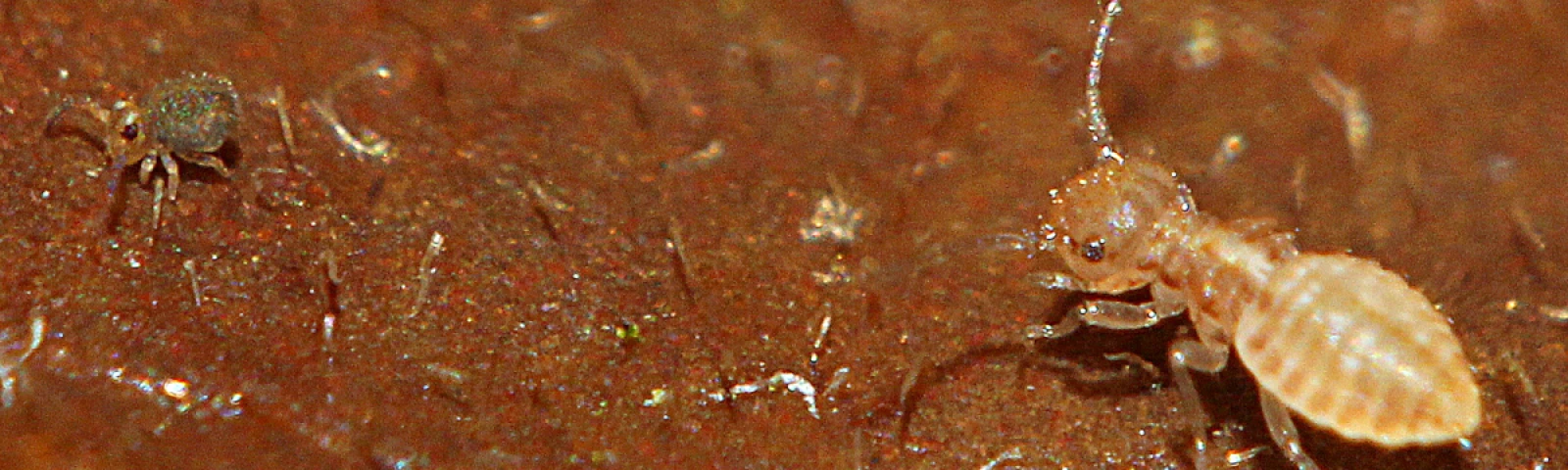
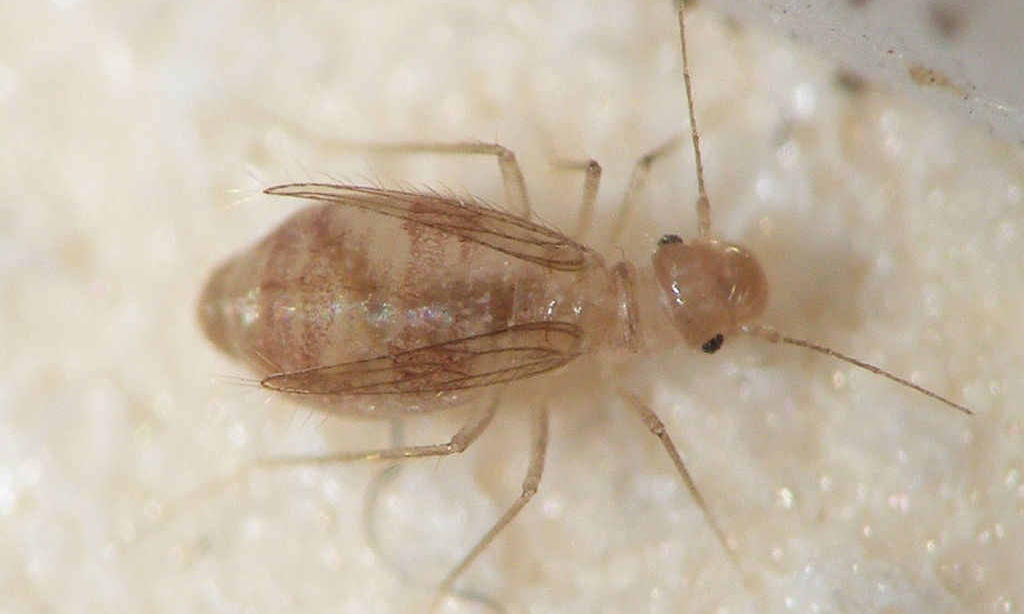
Booklice are small insects. Many indoor species are only about 1–2 mm long. To the naked eye, they can look like moving dots.
- A pale, greyish or brown body with long, fine antennae.
- Often seen near damp walls, windows, skirting boards, paper or cardboard.
- They can occur in several rooms where moisture and food are available.
Booklice are not house dust mites and do not bite. If in doubt, a sharp photo, size and location help assess the species.
Discuss the identificationTips and frequently asked questions
What can you do already?
Record the locations
Note the room and date. Take a photo with a coin, for example, for scale.
Reduce moisture and food sources
Check ventilation and leaks. Vacuum visible insects, remove damp cardboard and keep dry food stocks sealed.
Follow the agreed approach
Tell us which products or measures you have already used. We can then adapt inspection and any treatment accordingly.
Are booklice harmful?
Booklice do not bite or suck blood. Indoors they mainly cause nuisance. They may occur in stored food, paper and other starchy materials. Check affected stock and keep dry products sealed.
Will booklice disappear as the home dries out?
Reducing moisture can greatly reduce activity and sometimes resolve it completely. This takes time, especially while building materials still release moisture. Look at where insects occur and how activity changes, rather than a single room reading.
How many treatments are needed?
This differs between homes. Aylin in Brussels needed two treatments and a moisture problem also had to be corrected. For your home, we agree on the required work and follow-up beforehand.
Does heating a room above 30 °C help?
A room temperature above 30 °C is not a reliable complete treatment. It does not show the temperature reached in the insects’ hiding places. Focus on the moisture source, drying and measures in the treatment plan.
Can booklice occur after renovation?
Yes. New materials may still release moisture. Record where insects occur and discuss drying time and ventilation with the contractor. Our advice helps record observations for an assessment.
Do you also help with booklice in businesses?
Yes. We adapt inspection, measures and reporting to the premises and their use. In storage or food businesses, we also assess stock, damp materials and product storage areas.
Contact
Address your booklice problem
Tell us which rooms the insects occur in and since when. We will contact you to discuss the situation, approach and an appointment.
02 887 99 99Have a sharp photo of the insect or location? Email it to info@eversor.be with your name and postcode.
Your request
You receive clear agreements on the work and costs before we start.
More help and information
Booklice control in your area
Eversor helps with booklice in homes, apartments and business premises in Belgium. Contact us or view our service area.