
Fly control
House flies, drain flies, fruit flies, sewer flies, cluster flies. There are many types of flies. Each fly species has its own solutions and control methods. What is certain is that flies cause a lot of nuisance in Belgian homes. Do you have flies in your home and want to learn more about them? On this page, you’ll find all the information about flies, the different types of flies, how flies can be detected, and treated. You’re in the right place with Eversor for expert advice and professional treatments.
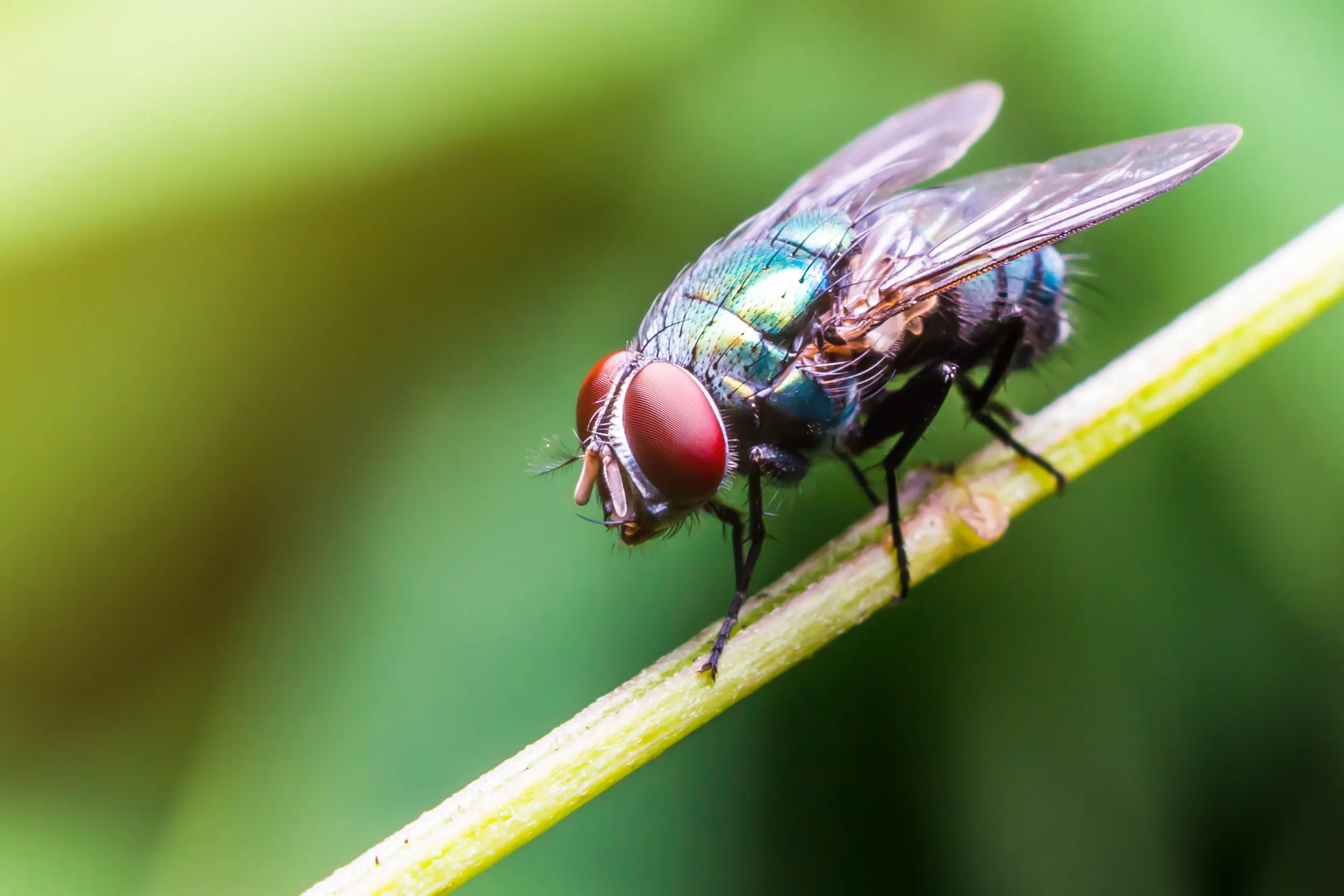
How do I recognize flies?
Flies can cause a lot of nuisance. You’d rather be rid of the critters than have them around. So, it’s important to get rid of flies as quickly as possible and leave the control to a professional.
What types of flies are there?
There are more than 5000 different species of flies and mosquitoes in Belgium, quite a lot. Only a few of all these species of flies actually cause damage and nuisance. The most common flies in Belgium are the house fly, the fruit fly and the cluster fly. If you are experiencing a fly infestation, it’s best to contact a professional pest control company as soon as possible.
1. Housefly
The most common fly in Belgium. The housefly feeds on rotting food and vegetable waste. The house fly is also called the chamber fly. They got that name because they prefer dark spaces like living rooms. The fly is 7 to 8 mm long, dark gray to black in color, and has four stripes along its length. The abdomen is pale yellow in color. The mouthparts of the housefly consist of a proboscis-like sucking mouthpart for ingesting liquid food. The sucking snout is directed downward and ends in a spongy pad. An adult lays 600 to 2000 eggs throughout its life, in groups of 100 to 150. The total lifespan of the housefly is up to 50 days. The housefly enjoys being on rotting products, bacteria, and fungi. The problem with this behavior is that they often carry diseases such as hepatitis, poliomyelitis, shigella, salmonella, and others. In addition, the housefly leaves its excrement on lamps and other objects.
2. Fruit flies
Fruit flies are attracted to rotting fruit, sour wine, soft drinks, beer, and other fermenting or decaying products. and vegetable waste. The fruit fly is 3 to 4 mm long, yellow to brown in color, and has a dark-striped abdomen. A female lays 400 to 900 eggs throughout her life, in groups of 15 to 25. These little eggs hatch within 30 hours. The complete development from egg to adulthood takes less than 2 weeks. Many food processing companies experience a lot of nuisance from fruit flies. An infestation often seems to arise out of nowhere, which can be very annoying, of course. Fruit flies spread fungi, bacteria and yeast cells because they are constantly on rotting food. As a result, they also contaminate other food sources.
3. Cluster flies
The cluster fly gets its name from the fact that they are often present in large groups. Often, thousands can be found in one place. They seek warm places and enter through small openings, such as in cavity walls. The cluster fly resembles the common housefly and is approximately 8 mm long with many golden hairs on the upper body. The eggs are laid in moist soil under rotting leaves and hatch after a week. The larvae parasitize on earthworms. Cluster flies are not harmful but can cause a lot of nuisance.
4. Bluebottle fly
The bluebottle fly breeds in rotting meat or cheese. The fly is 6 to 12 mm long and has a metallic blue color. The abdomen is pale yellow in color. The eggs hatch within 18 hours, and the larvae are fully grown after 12 days. The bluebottle fly is often found on dead rodents, carrion, and other carcasses. Therefore, the bluebottle fly can spread many diseases and bacteria.
What about do-it-yourself remedies from the internet or the store?
Minor flea infestations can often be treated with do-it-yourself methods. You can find these in our webshop. For major infestations, it’s better to seek assistance from a professional. For larger infestations, the right pesticides are needed, which are only accessible to professionals. That’s because the biocides used are often highly toxic. A professional knows how to handle this, understands the risks of usage, and knows how to protect themselves, you, and your environment from the dangers of the poison.
Do you have a problem with fleas? Or do you not know whether you have a problem with fleas or bedbugs? Don’t hesitate, prevent further nuisance. Contact us immediately.
What are the treatment methods against flies?
Problems with flies are very diverse. There are many different types of flies, and the causes can vary widely. When Eversor performs a treatment, the exterminators always first search for the cause of the infestation and the type of fly.
Below are some possible solutions for fly infestations. You’ll also find a number of do-it-yourself solutions.
The fly lamp
A handy solution is to purchase a UV insect lamp. The flies are attracted to the UV light. When the fly flies into the lamp, it gets electrocuted or remains stuck to a sticky plate. In the hospitality industry, only devices with sticky plates are allowed, insect lamps that electrocute are prohibited. At home or for other businesses, electrocuting lamps can also be used. In the Eversor webshop, you can find a wide range of high-quality UV lamps. All these lamps are equipped with LED technology and feature the best and latest techniques. With Eversor lamps, you can go ahead for many years.
Chemical method
For persistent problems, chemical extermination may sometimes be the only solution. A professional exterminator, like Eversor, may use biocides. An exterminator visits and first conducts an investigation to determine the cause and type of fly. Once the risk areas are identified, biocides are sprayed in the necessary places.
Biological fly control
In some environments, biological control can be a good solution. A unique way to conduct pest control, completely different from conventional methods. Biological control prevents a fly larva from developing into an adult fly. Consequently, there are fewer flies, resulting in less nuisance. Biological control is achieved by deploying natural enemies of flies.
Parasitoid wasps
Parasitoid wasps parasitize fly larvae. They lay their eggs inside the fly pupa, preventing the development of the fly. This process ensures that the fly never becomes an adult. They are small in size and difficult to detect by the naked eye. Parasitoid wasps are not harmful to humans and pets, but they are very effective in regulating fly populations.
Robber flies
The robber flies, also called predatory flies feed on the larvae of other fly species. Adult predatory flies lay their eggs near areas where larvae of other insects are present, such as rotting organic material or manure. Once the eggs hatch, the larvae of the robber flies feed on the larvae of other fly species. This process prevents the larvae of other flies from developing into adult flies, thus controlling the population of nuisance fly species. Predatory flies are thus also well suited for natural control of fly populations.
Do-it-yourself methods
For small infestations, do-it-yourself solutions may be an option. In the Eversor webshop, there are several items available for moth control.
The fly lamp has been discussed in detail above. Here are 3 do-it-yourself solutions below.
1. Insect spray
An insect spray can be very effective for smaller infestations. Spray on surfaces where the flies are. In the Eversor webshop you can find the best effective fly sprays approved in Belgium. These products also have a long-lasting effect. So you don’t have to worry about eggs hatching later.
2. Tea Tree oil
Add a few drops of tea tree oil to an oil burner and light it. The oil spreads an aroma that flies do not like, thus keeping them at bay. Of course, this only works to a limited extent and only against minor nuisances.
3. Fly Strips
Fly strips consist of long, sticky strips treated with a sticky substance. These strips can be hung from ceilings or other surfaces where flies are common. Using fly strips is safe, easy and environmentally friendly because they contain no chemicals or toxins. In the Eversor webshop you can order different types of fly strips.
So there are quite a few methods of controlling flies. The important thing, however, is always to find the cause and fix it. If this has not already happened, it is mopping up.
Can’t figure it out? Contact us. We are happy to help you.
Prefer to handle it yourself? Handy DIY products for fly control.
-
 AF Fruit Fly Traps + Lures (200 ml)€ 79,95
 -
 AF® Fruit Fly Bait (200 ml)€ 12,95
 -
 AF® Wasp and Fly Bait (400 ml)€ 14,95
 -
AF® Wasp and Fly Trap + Lure (400 ml)€ 24,95
-
 Bijenbekje Butt Joint Grille – Stainless Steel (set 10)Price range: € 15,95 through € 17,95
 -
 Bijenbekje Ventilation Grill – Anthracite (set of 10)Price range: € 24,95 through € 27,95
5 Tips Against Flies:
Make sure the house is always well clean.
Keep windows closed whenever possible and use screens or insect netting.
Make sure there is no standing water in or around the home.
Clear carcasses of mice and rats.
Use fly lamps, fly strips, fly traps and other handy tools.
The benefits of fly control at Eversor:
Expertly trained technicians
Environmentally friendly & sustainable solutions
Methodology according to IPM.
Fine and prompt customer service.
Large assortment of do-it-yourself products in the web shop
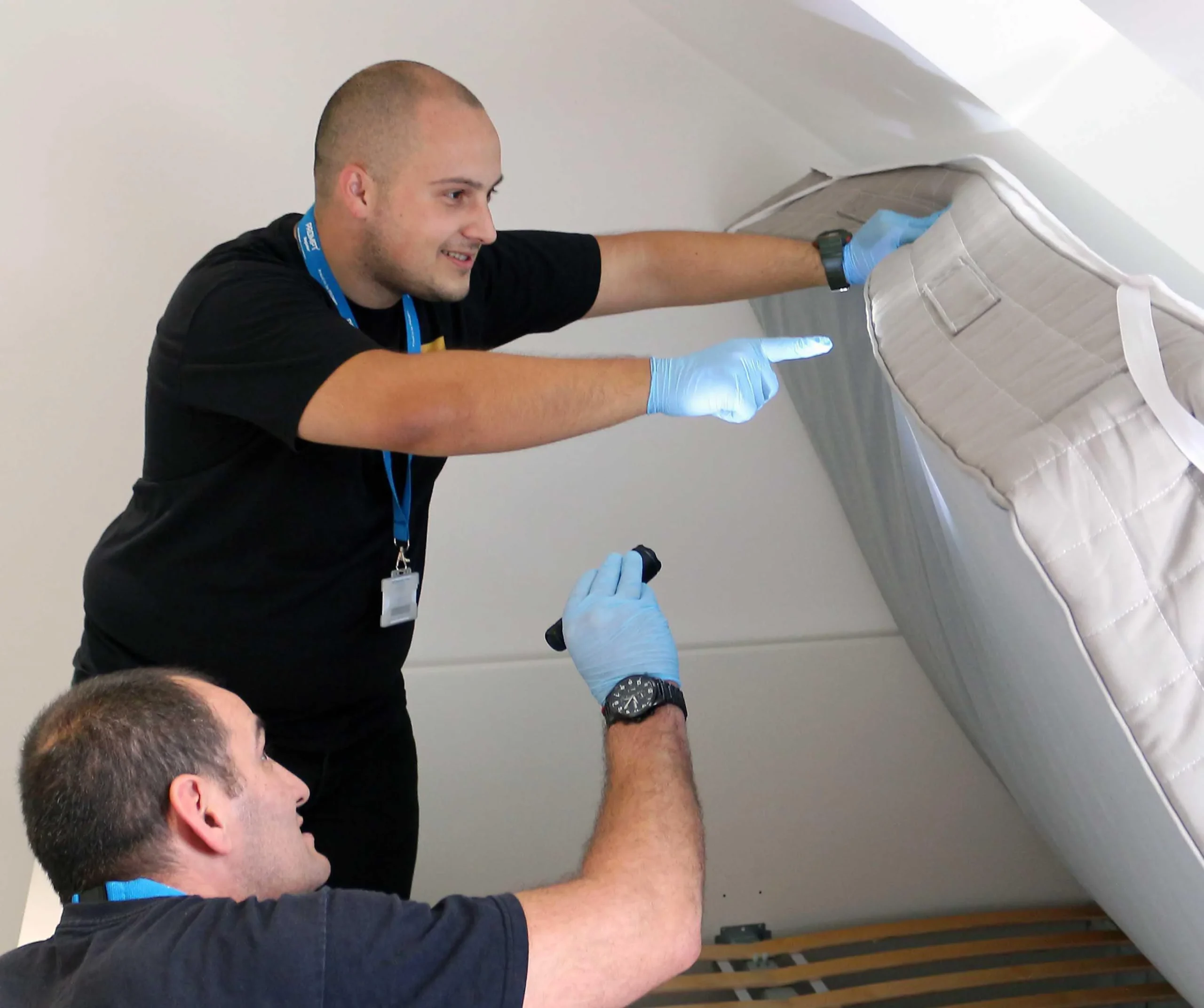
How does Eversor handle nuisance flies?
As soon as you contact us, we get to work.
First, we prepare specifications of your situation. We look specifically at your case here. In doing so, we take into account the location and the desired result. Based on our findings, we will create a personalized treatment plan and quote for you.
If you agree to the treatment method, you will be contacted as soon as possible to schedule an appointment.
The method of treatment varies from case to case. We may expect to need several treatments to properly resolve your problem. It may require only a single appointment to fix your problem.
During our 1st visit, we always start with a brief conversation and visual inspection. From this, some tips regarding prevention, warding and hygiene almost always follow. With preventive treatments and with EverSmart, we do the installation and other works directly. After this, if necessary, we will begin treatment immediately. Whenever possible, we take a completely non-toxic or biological approach (following the IPM method). If this is not an option, we use biocides.
After the initial treatment is over, you will receive all findings and required documentation online.
In any follow-up treatment, which often occurs after several weeks, we perform an inspection first. This way we know to what extent the initial treatment was successful and where our plan needs to be adjusted. After a follow-up treatment, you will receive the necessary documentation online again.
After the treatment, you will receive some tips and possible preventive measures to keep pests away even in the long run. You will also receive additional tips and information regarding inspections.
9 times out of 10, the problem is solved after the scheduled treatments. If the problem is still not resolved we will look at possible next steps.
Now you’re thinking…
Why choose Eversor?
Complete
A total package of pest prevention, control, and pest management. Working method completely according to HACCP and IPM methods. Large range of control and prevention agents.
easy
Sustainable pest contro, whenever possible without poison and by biological means. Always easy to find documentation online.
exceptional service
Support before, during and after treatment from our knowledgeable experts.


.svg.png)

